The apartment was different than I remembered. Not the building itself—that was the same tired facade, the same cracked walkway, the same buzzer that never worked quite right. But inside, the walls had shifted. The couch was where the dining table used to be. The kitchen had been painted a color I couldn't name. It was the same place and not the same place, which is how it feels when you return after a year away.
I arrived just as her parents were leaving for work. Her father had his keys in one hand, his coffee in the other. Her mother was already halfway out the door, phone pressed to her ear, nodding at something no one else could hear.
I hugged them hello and goodbye in the same motion. Her father's hand landed on my back, just below the shoulder blades. He paused. His fingers pressed gently, as if checking for something.
"No bra," I said. "I almost never wear one. They irritate me."
He nodded, said something about comfort, and then he was gone. The door clicked shut. The apartment settled into the particular silence of a place recently vacated.
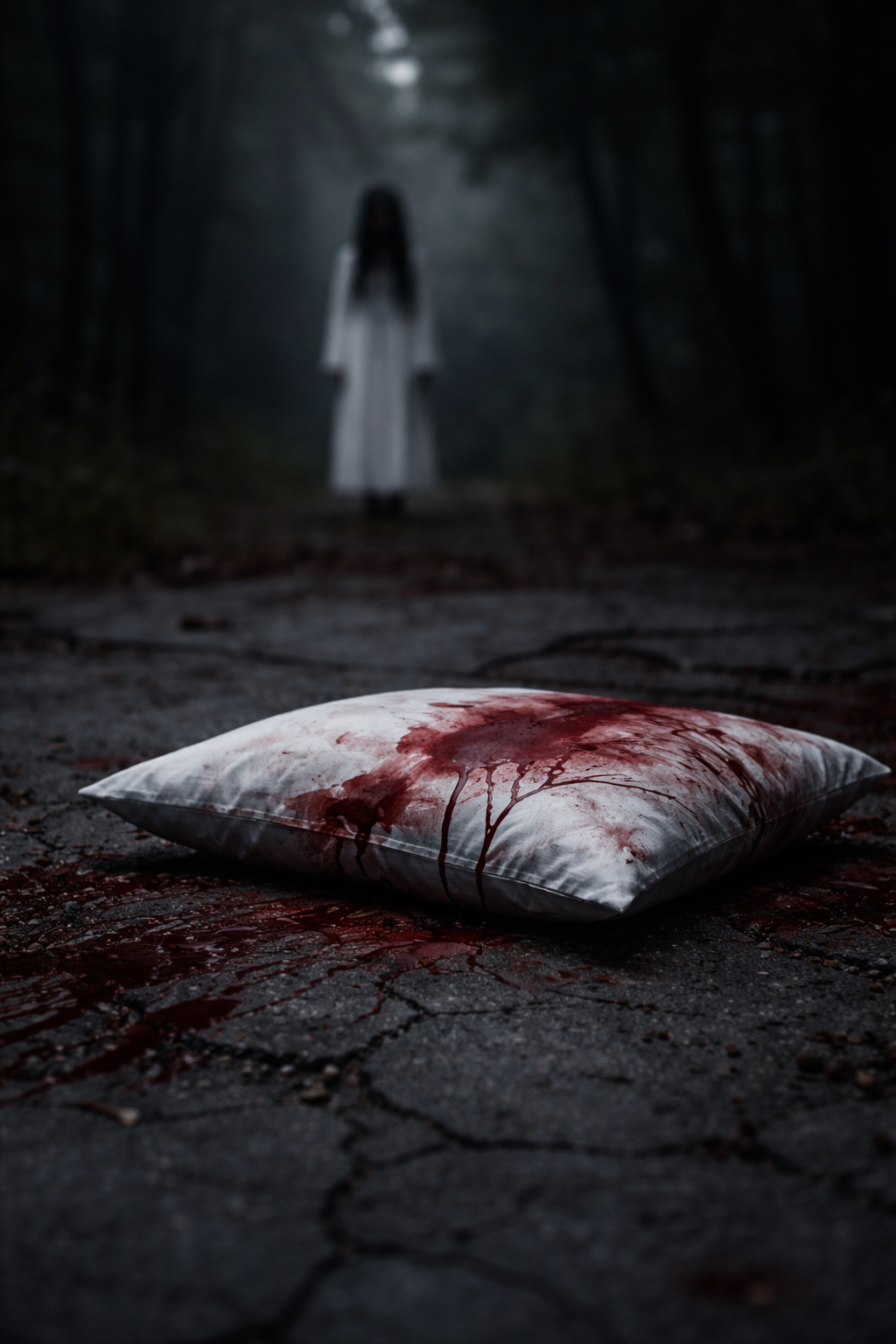
I was carrying a pillow. I don't know why. I had brought it with me, through the city, up the stairs, into this apartment where I had not been in twelve months. It was a good pillow, plush, the kind you sink into. I held it against my chest like a shield or a child.
My friend was about to say something when the first neighbor appeared.
She came through the door without knocking, already mid-sentence, as if we had been talking for hours and she was simply continuing. Then another neighbor, a man, followed by a woman who lived two floors down. They filled the living room, sat on the couch, leaned against the walls. They talked about things I did not follow—a dispute over parking, someone's nephew, the price of something somewhere.
I sat on the arm of a chair, the pillow still in my lap, and said nothing. I did not know these people. I had not seen my friend in a year, and now there were strangers in the room, filling the space that should have been ours.
"You haven't visited in a while," I said finally, to no one in particular. Or to her. Or to all of them.
She looked at me. Then she looked at the neighbors. "Could you give us a minute?" she said.
They left. Not reluctantly, not with protest. They simply turned and walked out, as if they had been waiting for permission.
Outside, the world had changed.
I saw it through the window, through the thin curtains that had been drawn against the morning sun. The street was gone. Not damaged, not altered—gone. In its place was a wasteland of cracked earth and skeletal trees. The sky was the color of old bruises.
People stood in the yard. Neighbors. The same neighbors who had just been in the living room, talking about parking and nephews. They stood in a loose circle, facing the gate, their heads tilted at the same angle, their lips moving in unison. I could not hear what they were saying, but I could feel it—a vibration in the air, a hum that seemed to come from the ground itself.
They spoke of a woman. The words reached me through the glass, through the walls, through the space between sleeping and waking. A woman with no eyes. Her sockets filled with blood that gored out. A dress white as snow. Hair black as the space between stars. She took people. She did not care what they were. She took them and she consumed them, and there was no part of them that she did not use.
I went to the gate. I do not remember deciding to go. I was simply there, my hand on the latch, the pillow still pressed against my chest. The people in the yard did not look at me. They continued their chant, their heads tilted, their lips moving, their eyes fixed on the forest beyond the gate.
I looked through the bars.
She rose from the ground at the edge of the trees. Not climbing, not emerging—rising, as if the earth had been holding her beneath its surface and had simply let go. Her dress was white. Her hair was black. Her face was a mask of blood, the sockets empty, the liquid pouring down her cheeks, her neck, her chest, soaking into the white fabric.
The ground cracked. From every fissure, more of them climbed. Tall, thin, slick with blood, moving with a speed that did not belong to anything that had ever been alive. They poured into the yard, into the street, into the spaces between the chanting people. The screaming started. I heard it, and then I stopped hearing it, because there was too much of it to process as sound.
I tried to run. My legs would not move. Something was pulling me toward the gate, toward the woman, toward the thing that had risen from the earth. The pillow slipped from my fingers. I could feel her attention, a weight, a gravity. I fought it. Every step forward felt like breaking a bone. I turned. I stumbled. I made it back to the house.
The door closed behind me. The sounds outside became muffled, then distant, then replaced by a silence that was worse than noise.
A boy was standing in the living room. He was small, maybe six or seven, wearing pajamas with cartoon dinosaurs on them. His face was blank. His eyes were too wide.
"Where are your parents?" I asked.
He did not answer. He looked at the door. He looked at the window. He looked at me, and I saw in his face the understanding that his parents were not coming.
Outside, the screaming had stopped. I heard footsteps now—fast, light, too many. The things were moving through the yard, through the street, through the world that had been ordinary an hour before. They would find the house. They would find us.
I took the boy's hand. I did not know where my friend was. I did not have time to look. I went through the back door, into a hallway that led somewhere else.
The cafeteria was a ruin. Tables overturned, chairs scattered, a counter smashed to splinters. I moved through it, the boy's hand tight in mine, stepping over debris and broken glass and things I did not look at too closely. A back exit, a loading dock, an alley that opened onto a street I did not recognize.
The town was dead. Not empty—dead. Bodies lay in doorways, in the gutter, in the middle of intersections. Blood pooled in the cracks of the pavement. The sky was the same bruise color, the air thick with something that was not quite smoke.
I walked. The boy walked beside me. I did not know where we were going. I did not know if there was anywhere to go. The streets stretched ahead, identical, endless, lined with buildings that had been emptied of everything except the aftermath.
I was still holding the pillow. I had picked it up somewhere—at the gate, in the hallway, in the cafeteria. It was in my hand now, the fabric damp with something I did not examine. I did not know why I was carrying it. It had no use. It was comfort, perhaps. Or memory. Or the refusal to let go of the last ordinary thing.
We walked. The boy did not cry. I did not cry. There was nothing to cry for. There was only the next street, the next block, the next horizon of ruined buildings and silence.
Behind us, somewhere in the city, the woman with the bloody eyes was still rising. The ground was still giving birth. The fast, thin things were still running.
Ahead of us, there was nothing I could name.
We walked.